Film dossier
The Virgin and the Gypsy
✓ Verified against Wikipedia Analysis by AI — scenes discussed, dialogue never reproduced
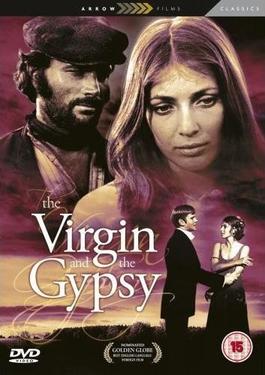
Poster via Wikipedia.
Metadata
| Title | The Virgin and the Gypsy |
|---|---|
| Director | Christopher Miles |
| Released | 1970 |
| Wikipedia | https://en.wikipedia.org/wiki/The_Virgin_and_the_Gypsy_(film) |
The Virgin and the Gypsy is a 1970 British drama film directed by Christopher Miles and starring Joanna Shimkus and Franco Nero. The screenplay by Alan Plater was based on the novella of the same name by D. H. Lawrence. The film was voted "Best Film of the Year" by both the UK and USA critics.
— Wikipedia, CC BY-SA.
Story & themes
Set in the English Midlands sometime in the 1920s, the film follows Yvette, a young woman returning home from finishing school to the suffocating household of her rector father and his domineering mother, known simply as the Mater. The family's respectability is a kind of tyranny, shaped by the absence of Yvette's mother, who years earlier ran off with another man — a scandal the household refuses to name or process honestly.
Yvette, played by Joanna Shimkus, is restless and half-formed, sensing that the polite world around her is deadening something essential in her. When she encounters a Romani man — the gypsy of the title, played by Franco Nero — she experiences a pull she cannot fully articulate. He represents freedom, physical vitality, and a life lived outside the structures that imprison her.
The film's central themes circle around repression versus liberation, the cost of bourgeois respectability, and the awakening of a young woman to her own desires and identity. Lawrence's original novella used the gypsy as a symbolic and erotic counterforce to middle-class England, and the film preserves that opposition without reducing it to simple romance. The landscape itself — grey, damp, constrained — works against the warmth the gypsy embodies.
The relationship between Yvette and the gypsy develops through charged encounters rather than sustained contact, keeping the tension alive and unresolved for most of the film.
How it ends: A catastrophic flood strikes the area, and the gypsy rescues Yvette from the rising waters, sheltering with her through the night. The experience strips away pretense and brings them into genuine intimacy. In the aftermath, he disappears from her life, leaving her changed but without him — her awakening complete, her conventional world still waiting to reclaim her.
Direction & craft
Christopher Miles brought a measured, sensuous touch to Lawrence's novella, resisting the urge to melodrama and instead letting atmosphere and unspoken desire do the work. The pacing is deliberately slow, allowing the English countryside and the claustrophobic rectory household to press in on the characters like physical forces.
Joanna Shimkus gives Yvette a quality of trembling alertness — watchful, uncertain of herself, simultaneously drawn toward and frightened by experience. Franco Nero's gypsy is more elemental than psychological, a figure of pure physical presence and contrast, and Nero plays him with a stillness that makes him genuinely magnetic. The supporting cast, particularly the actors playing the repressive household, grounds the film in a suffocating social reality that makes the romantic tension feel genuinely dangerous.
The cinematography captures the English Midlands landscape with a cool, slightly melancholy palette — grey skies, wet fields, the damp interior of the rectory — broken by warmer, more luminous passages whenever the gypsy is near. This visual contrast does real thematic work, externalising what Yvette feels.
The editing respects silence and stillness rather than cutting for energy, which suits the material. Scenes breathe, and glances between characters are allowed to linger past comfort. The score complements this restraint, using music sparingly so that natural sound — wind, rain, water — carries considerable weight.
The film's most technically noted sequence is its flood, which unfolds with real force and dramatic economy. It serves simultaneously as physical crisis and emotional release, and the staging of it drew particular praise from critics who recognised it as genuinely cinematic rather than merely literary adaptation.
Making the film
Christopher Miles had already shown an interest in literary adaptation before tackling D. H. Lawrence's unfinished novella, which was published posthumously in 1930. The project attracted him partly because the story's tensions — repressed English domesticity cracking open against something wilder and more sensual — suited the late 1960s cultural moment perfectly.
Alan Plater, a respected British television and stage writer, adapted the screenplay. His work stayed close to Lawrence's atmosphere of suffocating rectitude in a Midlands rectory and the charged, largely unconsummated pull between a young woman and a Romani man she encounters on the road.
Joanna Shimkus, a Canadian actress who had been building a European film career, was cast as Yvette, the rector's daughter. Franco Nero, the Italian star fresh from Camelot and his Spaghetti Western fame, took the role of the gypsy. Their pairing brought an international commercial appeal to what might otherwise have remained a modest British art film.
The production filmed largely on location in Derbyshire, using the Peak District landscape to evoke the moorland setting Lawrence had drawn from his own experience of the region. The physical environment — brooding, damp, hemmed in by stone walls — does considerable work in the finished film.
The climactic flood sequence, in which the rectory is inundated and the two central characters are thrown together, required significant practical logistics on location and is remembered as the production's most demanding shoot.
The film's strong reception — named best picture of 1970 by both British and American critics — gave it a prestige that outlasted its relatively modest release, and it remains the most admired screen adaptation of this particular Lawrence work.
Historical context
By 1970, the so-called permissive society was in full bloom in Britain, and cinema had been grappling with how frankly to depict sexuality and class for the better part of a decade. The Virgin and the Gypsy arrived at a moment when D. H. Lawrence was enjoying a particular cultural prominence — Ken Russell's Women in Love had appeared just the previous year, and there was an appetite for serious literary adaptations that engaged honestly with repression and desire.
For Christopher Miles, the film represented his most ambitious project to date. He had made short films and smaller features, and this Lawrence adaptation gave him a chance to work with international stars on a subject of genuine literary weight.
Franco Nero came to the film at the height of his European stardom, having made his name in spaghetti westerns and the Hollywood musical Camelot. His casting as the magnetic, outsider gypsy carried associations that were hard to ignore — he embodied a kind of romantic foreignness that suited Lawrence's symbolic intentions perfectly.
Joanna Shimkus, a Canadian actress who had worked in French and British productions through the late 1960s, found in this role one of her most substantial parts. She retired from acting not long after to marry Sidney Poitier, making this film a near-final statement in her career.
The film's strong critical reception on both sides of the Atlantic — voted best film of the year by critics in both the UK and USA — suggests it struck a nerve at exactly the right moment, offering literate, emotionally serious cinema at a time when audiences and critics were hungry for adaptations that treated Lawrence as something more than an excuse for controversy.
Release & reception
The Virgin and the Gypsy opened in 1970 to a notably warm critical reception on both sides of the Atlantic. The film's most striking distinction was being voted Best Film of the Year by both UK and US critics — a rare double honour that placed it among the most acclaimed British productions of its moment, and a significant achievement for a modestly scaled literary adaptation.
Critics responded to the film's atmospheric sensuality and its faithfulness to Lawrence's novella, praising Christopher Miles for capturing the repressive English provincial world the story inhabits. Joanna Shimkus and Franco Nero drew consistent admiration, with reviewers noting the charged tension between their characters as one of the film's central pleasures. Alan Plater's screenplay was seen as a respectful but cinematic reworking of the source material.
Commercially, the film performed respectably for a British art-house production of the period, finding audiences both at home and in North America who were drawn by the Lawrence pedigree and the casting of the internationally recognisable Franco Nero. It was not a blockbuster in any conventional sense, but it reached a wider audience than many comparable literary adaptations of the era.
No significant controversy attached itself to the film at the time of release, which was itself notable given that Lawrence's work had been the subject of fierce censorship battles — Lady Chatterley's Lover being the most famous example. By 1970 the cultural climate had shifted enough that the film's sensuality passed without serious objection, a mark of how quickly British attitudes had moved since the obscenity trial of just a decade earlier.
Sequels, remakes & sources
The Virgin and the Gypsy stands as a faithful adaptation of D. H. Lawrence's posthumously published novella, itself closely related to Lawrence's broader autobiographical and social concerns. The film has no sequels or prequels, and no major remake has been produced. Its family tree is therefore compact: the source novella is the primary kin, alongside the wider Lawrence adaptation tradition that includes several filmed versions of his other works from the same era.
Links open a search on that service.
Influence & legacy
The Virgin and the Gypsy arrived at a moment when literary adaptations of D. H. Lawrence were enjoying serious cinematic attention, and it contributed to sustaining that wave into the early 1970s. Coming shortly after Ken Russell's Women in Love (1969), it reinforced the case that Lawrence's fiction could translate into intelligent, visually sensuous British filmmaking rather than merely respectable heritage pictures.
The film's critical reception was striking. Being voted Best Film of the Year by both UK and USA critics in 1970 gave it genuine prestige at the time, a double honour that placed it above many better-remembered titles from that year. That standing has not fully persisted in mainstream film culture, and it remains less discussed than Women in Love, but it holds a secure place among connoisseurs of British cinema from the period.
Franco Nero's performance contributed to his growing international profile during this era, and Joanna Shimkus's portrayal of Yvette drew admiring notices that underlined her abilities before she largely withdrew from acting. The flood sequence near the film's climax became the element most often cited by critics and viewers — a scene of physical danger and suppressed eroticism that was felt to capture the Lawrence spirit economically and with real cinematic force.
Among Lawrence adaptations specifically, the film tends to appear on curated lists alongside Women in Love and the later The Rainbow (1989), forming an informal trilogy of serious attempts to engage with his work. Christopher Miles never surpassed it in terms of critical recognition, and it remains the defining achievement of his directing career.
Today it is appreciated mainly by devotees of British literary cinema and Lawrence scholarship, occasionally revived in retrospective programmes but not widely available in prominent streaming catalogues.