Novel dossier
Erewhon
✓ Verified against Open Library Analysis by AI — the text discussed, never reproduced
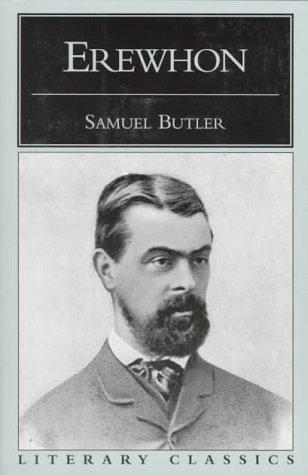
Jacket art via Open Library covers.
Metadata
| Title | Erewhon |
|---|---|
| Author | Samuel Butler |
| First published | 1700 |
| Subjects | Fiction, humorous, general, Fiction, Utopian fiction, Satirical fiction, Fiction, general, Utopias |
| Known editions | 338 |
| Copyright | Public domain — free to read |
| Open Library work | /works/OL22364W |
Plot & themes
Erewhon was first published in 1872, not 1700 as listed — the Open Library date appears to be a significant error, possibly attached to a misclassified edition.
The novel follows Higgs, a young man working on a sheep farm in an unnamed country (based loosely on New Zealand) who becomes obsessed with crossing an unexplored mountain range. What he finds beyond is Erewhon, a hidden civilization whose customs invert or satirize Victorian English society in ways both comic and unsettling.
Butler uses the premise to skewer several targets at once. The Erewhonians criminalize illness — treating the sick as moral offenders and the criminal as someone deserving sympathy and medical attention. Their "Musical Banks" parody organized religion, operating with great ceremony but producing currency nobody actually uses for anything practical. Most famously, they have banned machinery entirely after a philosopher argued that machines might evolve consciousness and eventually dominate humanity — a prescient riff on Darwinian logic that feels startlingly modern.
Higgs is less a fully developed character than an observer, a straight man whose bewilderment allows Butler to lay out one absurdity after another. His relationship with Arowhena, a local woman, provides a thin romantic thread through the satire. The novel's tone is dry and ironic throughout, treating its impossible social arrangements with the deadpan seriousness of a travel memoir.
The major thematic argument is that many conventions held sacred in Victorian England — religious observance, attitudes toward misfortune, faith in progress — are no more rational than Erewhon's obvious absurdities. Butler asks whether his readers can see their own reflection in the mirror.
How it ends: Higgs eventually escapes Erewhon by balloon with Arowhena, returning to England where he hopes to mount a colonizing expedition back to the country. The ending is deliberately ambiguous in tone — triumphant on the surface but undercut by the implication that Higgs may simply be importing one set of absurdities to replace another.
Narrative craft
A note on the date: Open Library lists 1700, but Erewhon was first published in 1872. The 1700 date is almost certainly a cataloguing error for a reprint or edition entry.
The novel is narrated in the first person by a young sheep farmer who travels into an unmapped mountain range and stumbles upon the hidden civilization of Erewhon. Butler keeps this narrator affable and slightly obtuse — he records the strange customs around him with bemused seriousness, which is precisely the joke. The reader sees the satire that the narrator often misses.
The structure is straightforward and chronological: an opening journey through dangerous terrain, arrival and captivity in Erewhon, an extended stay during which the narrator learns the society's laws and institutions, and finally an escape by balloon. There are no radical time-shifts or fragmented chapters. The middle section, where customs are explained, is the philosophical heart of the book and is essentially a series of satirical essays embedded in a travel narrative — a device Butler borrowed from Swift and Voltaire.
The prose is plain, ironic, and controlled. Butler writes with the polished dryness of a Victorian essayist rather than a novelist looking for drama. Sentences are measured and reasonable in tone, which makes the absurdity of what they describe all the funnier.
Pacing slows considerably in the central expository sections — particularly the chapters dealing with the Colleges of Unreason and the treatment of illness as crime. Readers looking for plot will find these stretches demanding. But this deceleration is deliberate: Butler wants the reader to sit with each inverted institution long enough to recognize its real-world counterpart.
The technique the book is most famous for is sustained systematic inversion — taking a Victorian norm and reversing it with deadpan logical consistency.
Historical context
Erewhon was published in 1872 — not 1700 as listed in the Open Library record, which almost certainly reflects a cataloguing error or a misdated reprint. Samuel Butler was thirty-six at the time and still finding his footing as a writer. He had spent several years in New Zealand during the 1860s as a sheep farmer, and that experience of crossing unmapped mountain terrain directly fed the novel's opening geography.
The book appeared at a moment when Darwin's ideas were reshaping almost every corner of Victorian intellectual life. On the Origin of Species had been out for thirteen years, and Butler, who admired Darwin before growing deeply ambivalent about him, used Erewhon partly to probe where evolutionary thinking might lead. The satirical chapters on machines — arguing that devices might evolve consciousness and should therefore be abolished — are a direct, comic engagement with Darwinian logic pushed to an absurd conclusion.
Victorian England was also reckoning with industrialisation, religious doubt, and the rigidities of its own legal and moral codes. Butler skewers all three. In Erewhon, illness is a crime and crime is treated as an illness — a neat inversion designed to expose the arbitrariness of how his own society assigned blame and punishment.
Butler published the first edition anonymously, and its success surprised him. It was one of very few unambiguous hits in a career otherwise marked by neglect and controversy, including his later disputes with the Darwinian establishment. Erewhon thus sits at a productive early moment: Butler sharp enough to diagnose his era's contradictions, irreverent enough to mock them, but not yet embroiled in the feuds that would define his later reputation.
Publication & reception
The Open Library date of 1700 is certainly wrong. Erewhon was first published in 1872 — over a century and a half later. This is one of the clearest cases of a misdated reprint corrupting the record.
Butler published Erewhon anonymously in May 1872, paying Chapman and Hall to produce it after struggling to find a publisher willing to take it on conventional terms. The gamble paid off remarkably quickly. The book sold out its first edition within weeks, delighting London readers who enjoyed both its satirical bite and its puzzling quality — nobody was quite sure who had written it.
The anonymity generated real excitement. Speculation ran through literary circles, with some readers attributing the work to well-known figures of the day. When Butler revealed his authorship, his reputation as a sharp and eccentric thinker was established almost overnight.
Critics responded with genuine enthusiasm, recognising the book's debt to Swift while appreciating its very Victorian preoccupations — particularly the extended satire on Darwinian ideas, rendered through the fictional "Book of the Machines." Reviews were largely positive, though some readers found its satirical targets slippery or its structure uneven.
A second edition appeared the same year, revised and expanded, this time under Butler's name. Commercial success was real but modest by the standards of popular fiction; the book never made Butler wealthy. He revised it again for a third edition in 1901, adding a new preface that situated the work in the context of his later thinking.
Erewhon did not win formal prizes — such apparatus barely existed in 1872 — but it earned Butler lasting literary standing and remains his most widely read and discussed work.
Editions & adaptations
Erewhon has enjoyed a remarkably active publishing life since its anonymous first edition in 1872 — not 1700 as Open Library's record suggests, almost certainly a data error. Butler revised it substantially for a second edition the same year and again in 1901. The satire's prescient machine-intelligence chapters have kept it continuously in print, attracting scholarly editions and cheap reprints alike. Screen and stage adaptations are rare, reflecting the novel's essayistic structure, but it has attracted radio treatment and remains a touchstone in utopian and science-fiction criticism.
Links open a search on that service.
Influence & legacy
Note: Open Library lists 1700 as the first publication year, but this is certainly a dating error — Erewhon was first published in 1872. The 1700 date likely reflects a misdated reprint or cataloguing error.
Erewhon arrived in 1872 and immediately found readers who recognized its satirical intelligence. It sold well enough to establish Butler's reputation and has never gone entirely out of print, a quiet form of permanence that speaks to its staying power.
Its most documented influence lies in its treatment of machines. The chapters sometimes called the "Book of the Machines" — in which Erewhonians have banned technology after fearing that machines might develop consciousness — are regularly cited as a precursor to science fiction's long engagement with artificial intelligence and robot rebellion. Writers and critics working in that tradition frequently acknowledge Butler as an early, serious thinker on the question of whether machines could evolve minds.
George Orwell admired Butler and wrote about him with respect. Samuel Butler's skeptical, ironic intelligence can be felt in the tradition of English satirical dystopia that runs through the twentieth century, even where direct influence is hard to pin down.
The novel appears on various lists of early utopian and satirical fiction, and scholars of the genre treat it as a foundational text alongside More's Utopia and Swift's Gulliver's Travels. Its standing in academic syllabuses on Victorian literature and the prehistory of science fiction has grown rather than shrunk over time.
The word "Erewhon" itself — "nowhere" roughly reversed — has become a recognizable shorthand for an imaginary satirical society, used occasionally in critical writing when describing invented worlds designed to hold a mirror to real ones.