Song dossier
Papaoutai
✓ Verified against MusicBrainz Analysis by AI — lyrics discussed, never reproduced
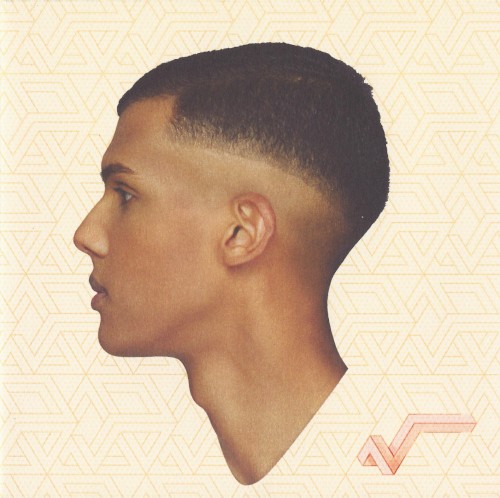
Sleeve art via the Cover Art Archive.
Metadata
| Title | Papaoutai |
|---|---|
| Artist | Stromae |
| First released | 2013-05-13 |
| Written by | Stromae |
| Length | 3:52 |
| Work | Papaoutai |
| MusicBrainz recording | 6574951b-e03c-400c-b807-476c4a7b7635 |
Lyrical themes
"Papaoutai" — the title itself is a phonetic rendering of the French question "Papa, où t'es?" meaning "Dad, where are you?" — announces its subject immediately. The song is an unflinching meditation on paternal absence, written by Stromae from the perspective of a child who cannot understand why his father is not there. Stromae's own father, a Rwandan architect, was killed in the 1994 genocide when Stromae was a young boy, and that biographical wound gives the song its raw emotional credibility.
The narrative moves between a child's plaintive confusion and a broader, almost sociological observation about absent fathers in general. Rather than wallowing in sentimentality, Stromae adopts a tone of bewildered irony — the child notices that fathers are never explained, that the question of how to become a man goes unanswered precisely because the teacher is missing. The song gestures toward cycles of absence, suggesting that men who never had fathers may in turn become absent fathers themselves.
The imagery is deliberately domestic and ordinary: a child watching other families, noticing what he lacks, measuring his own life against a gap he cannot fill. There is no rage directed at the absent father — the emotional register is closer to quiet devastation and unresolved longing. The child's voice is tender rather than accusatory, which makes the grief land harder.
The accompanying music video amplifies these themes visually, depicting a boy whose father is literally a frozen, motionless figure, present in body but absent in every meaningful sense — a different but related interpretation of fatherhood's failure.
Widely discussed on release, the song resonated far beyond Belgian or French-speaking audiences, touching listeners who recognized the specific silence a missing parent leaves behind.
Song structure
Papaoutai opens with a sparse, almost childlike keyboard motif that immediately establishes its central emotional question before a single word is sung. This brief intro sets a deceptively light tone that the rest of the track slowly complicates.
The song follows a relatively straightforward verse-chorus architecture, but the arrangement does most of the dramatic work. Early verses sit over a minimal electronic bed — dry percussion, that keyboard figure, and Stromae's conversational delivery. The sparseness mirrors the lyrical idea of absence: there is deliberately not much there.
The chorus lands with a significant dynamic lift. The beat fills out, synth layers thicken, and Stromae's vocal becomes more urgent and melodic. The contrast between the hollow verses and the fuller choruses is not subtle — it functions almost like the emotional outburst a child might feel after a long period of quiet confusion.
The track cycles through this verse-chorus pattern a few times, each return to the chorus accumulating a little more sonic weight. A mid-section break introduces a memorable shift in energy — the groove becomes more insistent and danceable, almost paradoxically festive, which is typical of Stromae's habit of wrapping difficult themes in body-moving arrangements.
The outro is one of the song's most discussed structural choices. Rather than a conventional fade or climactic resolution, the track closes in a way that echoes its opening sparseness, returning to a skeletal texture that underlines the unresolved nature of the song's central theme. The memorable moments are the initial keyboard hook, the first big chorus drop, and that deliberately unresolved ending — each landing at roughly the points a listener would predict, yet each carrying more emotional charge than its structural position alone would suggest.
Musical composition
Stromae wrote and produced "Papaoutai" himself, and the track opens with an immediately recognisable drum-machine pattern — a crisp, metronomic electronic beat that drives the entire song at a moderate dance tempo, somewhere in the neighbourhood of a mid-paced electronic pop groove. The feel is cool and slightly detached, which suits the emotional subject matter of an absent father perfectly.
The harmonic language is minimal and hypnotic. The song sits in a minor key and cycles through a short, repeating chord progression that barely departs from its home territory. There are no dramatic key changes or modulations — the tension comes instead from repetition and accumulation rather than harmonic surprise. It has the quality of a lullaby that has curdled slightly, a circular logic that mirrors the lyrical theme of a question with no answer.
Melodically, Stromae's vocal line is conversational and precise, sitting in a fairly narrow range but deployed with theatrical flair. The phrasing is rhythmically tight, locking in with the beat rather than floating over it. The hook is immediately memorable despite — or because of — its simplicity.
The instrumentation is spare: the electronic kit is the engine, supported by synthesiser pads and bass, with a chopped vocal sample that gives the track its slightly eerie, dancing-puppet quality. The production is clean and surgical, with plenty of space in the mix, which makes the beat feel enormous without being cluttered.
Stromae produced the record himself under his own creative direction, and it has the hallmarks of Belgian electronic pop of that era — indebted to house and electro, but filtered through a singer-songwriter's attention to melody and meaning. The production restraint is itself part of the emotional effect: the emptiness in the sound echoes the emptiness in the story.
Historical context
Stromae released "Papaoutai" in 2013 as the second single from his album Racine carrée, arriving roughly three years after his breakthrough hit "Alors on danse" had turned the Belgian artist into an unlikely pan-European phenomenon. That earlier track had topped charts across the continent largely on the strength of a single viral moment, and many observers were curious whether Stromae could build something more sustained. Racine carrée, and "Papaoutai" in particular, answered that question definitively.
The song appeared at a moment when electronic pop with a strongly conceptual or emotional core was gaining serious critical traction. Artists like Disclosure and Daft Punk were demonstrating in 2013 that dance-adjacent music could carry genuine weight, and Stromae occupied a distinctive position in that landscape — French-language, theatrically minded, rooted in Belgian culture but speaking to audiences well beyond it.
"Papaoutai" deals with the absence of a father, a subject with direct autobiographical resonance for Stromae, whose own father died in the 1994 Rwandan genocide. That biographical context was widely reported at the time and gave the song a layer of meaning that listeners and critics found difficult to ignore.
Commercially, the song was a major success across francophone markets and beyond. It reached number one in France, Belgium, and Switzerland, among other countries, and performed strongly across Europe more broadly. The accompanying music video, which depicted a child alongside a mannequin-like, unresponsive father figure, was praised for the precision with which it visualised the song's themes without being heavy-handed.
Reception was largely rapturous. Critics noted that Stromae had moved from dance-floor novelty to something approaching auteur status, cementing Racine carrée as one of the defining French-language pop albums of the decade.
On screen
Stromae's "Papaoutai" made a striking impression on screen audiences in the years following its 2013 release, though its on-screen placements are fewer than those of some pop contemporaries.
The song appeared in the Belgian and broader European cultural landscape in ways that were largely organic — it was used in several television contexts across Europe, particularly in programs and montages dealing with themes of family and absence, which align naturally with the song's subject matter of fatherlessness. However, specific documented placements in major films or high-profile advertising campaigns are limited and not easy to verify with confidence.
One well-documented context is its use in live performance footage and documentary coverage of Stromae himself, which appeared across broadcast television internationally, including on major French and Belgian channels in 2013 and 2014 as part of arts and culture programming around the album Racine carrée.
The song and its striking official music video — which depicts a child yearning for an absent father through a clever visual conceit involving a motionless man in a public space — were themselves treated almost as a standalone audiovisual work and screened in various film festival and short-film contexts in Europe.
In terms of advertising, there are no well-documented major commercial campaigns using the track that can be stated with confidence.
The honest picture is that "Papaoutai" became culturally pervasive through radio, streaming, and its viral music video rather than through notable sync placements in film or television drama. Its screen presence was real but diffuse — the kind of song that turns up in the background of a decade rather than anchored to one iconic scene.
Covers & hits
Released in 2013, "Papaoutai" became one of the defining European pop hits of the decade, topping charts across Belgium, France, and Switzerland and earning Stromae international acclaim. Its themes of paternal absence resonated widely, spurring numerous covers across genres and languages. The song's distinctive Congolese rumba-inflected beat and haunting emotional weight made it a compelling choice for artists ranging from classical crossover performers to African pop musicians, extending its reach far beyond its Belgian origins.


Previews and buy links via the iTunes Search API; other links open a search on that service.
Influence & legacy
"Papaoutai" landed in 2013 as one of the most striking French-language pop songs in years, and its influence spread well beyond Belgium and France. The track helped revive international appetite for Francophone pop among younger listeners who might otherwise never have sought it out, and Stromae became a gateway artist for a generation discovering that music sung in French could feel urgent and contemporary rather than nostalgic.
The song's combination of minimal electronic production with emotionally heavy subject matter — paternal absence, family silence — influenced a wave of Belgian and French artists working in the space between pop and electronic music. Producers in the mid-2010s noted how Stromae stripped a painful theme down to something almost skeletal in its arrangement, letting tension do the work that instrumentation usually handles.
"Papaoutai" received substantial award recognition in Europe, winning multiple prizes at the MIA (Music Industry Awards) in Belgium and earning Stromae recognition at the Victoires de la Musique in France. The song appeared on numerous critical lists compiling the best tracks of the 2010s, and it remains a standard reference point in discussions of 2010s European pop.
The song has been sampled and interpolated by several artists across hip-hop and R&B, and its distinctive opening groove has turned up in remixes and DJ sets globally. Its viral spread via YouTube — the video itself, with its unsettling choreography, accumulating hundreds of millions of views — helped establish that French-language content could achieve genuine worldwide reach in the streaming era.
Today "Papaoutai" is widely regarded as a modern classic of European pop, regularly cited as Stromae's signature work and included in curricula where contemporary Francophone culture is taught.