Song dossier
Engine No. 9
✓ Verified against MusicBrainz Analysis by AI — lyrics discussed, never reproduced
Metadata
| Title | Engine No. 9 |
|---|---|
| Artist | Wilson Pickett |
| First released | 1972 |
| Written by | Kenneth Gamble, Leon Huff |
| Length | 2:46 |
| Work | Engine Number Nine |
| MusicBrainz recording | ddab4a57-50e5-4ca4-abcf-e8ed65bb007a |
Lyrical themes
"Engine No. 9" is built around a train as an extended metaphor for unstoppable romantic desire and emotional momentum. The narrator is consumed by a relationship so powerful that he compares its force to a locomotive — something mechanical, massive, and impossible to slow once it reaches full speed. The train imagery gives the song a visceral, almost physical quality; the listener can feel the weight of the feeling building, picking up steam, rattling down the tracks.
The point of view is intensely personal and confessional. The narrator is not observing the emotion from a distance — he is inside it, carried along by it, barely in control. There is a sense of surrender to something larger than willpower, which fits comfortably into the soul tradition of treating love as an overwhelming force rather than a gentle sentiment.
The emotional register combines euphoria with a kind of helplessness. The joy of the feeling and the loss of self-command exist side by side, which gives the song a bittersweet undertow beneath its driving, celebratory surface. This tension — between pleasure and powerlessness — is one reason it resonates across audiences.
Written by Kenneth Gamble and Leon Huff, the architects of Philadelphia soul, the lyrical approach reflects their house style: direct declarations of emotion grounded in vivid everyday imagery rather than abstract poetry. Trains had deep resonance in Black American culture as symbols of freedom, migration, and forward motion, and that historical weight enriches the metaphor considerably, even if the song operates primarily on the level of personal romance.
Wilson Pickett's raw, urgent delivery amplifies these themes; his voice suggests a man who genuinely cannot contain what he is feeling, which makes the locomotive metaphor feel entirely earned.
Song structure
"Engine No. 9" opens with one of the most immediately recognizable intros in early-seventies soul: a punchy, riff-driven brass figure that announces the song's locomotive energy before a note of the main groove has arrived. That intro is brief but commanding, and it plants the listener squarely in Gamble and Huff's Philadelphia-flavored universe even though Pickett recorded the song in their orbit rather than at Stax.
The body of the song follows a fairly straightforward verse-chorus structure. Verses carry the narrative, with Pickett riding over a deep, churning rhythm section that keeps the train-metaphor momentum going. The choruses are where the horns reassert themselves, punching through the mix and giving Pickett a platform to push his voice higher and harder.
The arrangement builds steadily rather than explosively. Each pass through the verse-chorus cycle adds a little more weight — the rhythm section tightens, the brass stabs become more insistent, and Pickett's vocal delivery grows more urgent. There is no conventional bridge that steps outside the groove; instead the song sustains its intensity through repetition and slight dynamic swell, leaning on the call-and-response interplay between the singer and the horns.
The outro extends the groove outward, letting the band stretch before the fade. That fade is generous enough to feel satisfying rather than abrupt, giving the brass and rhythm section room to lock in together one final time.
The most memorable moment for most listeners lands on those recurring horn punches in the chorus, which have made the track a favorite source material for hip-hop producers sampling the mid-section break. The energy never really drops from intro to fade — this is a song built to sustain a single, propulsive mood from start to finish.
Musical composition
Wilson Pickett's "Engine No. 9" sits in a driving, mid-tempo funk groove — not frantic, but insistent, with the kind of locked-in momentum the title image demands. The track pulses forward like something on rails, which is partly the point.
The song was written by Kenny Gamble and Leon Huff, the architects of Philadelphia Soul, and it was recorded at Muscle Shoals Sound Studio in Alabama — an unusual pairing of Philly songwriting craft with Deep South sessionwork. The production is crisp but earthy: you hear the warmth of live musicians rather than the orchestrated gloss Gamble and Huff would bring to their Philadelphia International recordings later in the 1970s.
The harmonic language is straightforward funk-soul: the track is built on a minimal chord palette, leaning heavily on a single tonal center with simple movements that keep the groove hypnotic rather than harmonically adventurous. There is no dramatic modulation — the song earns its momentum through rhythmic tension rather than harmonic surprise.
Melodically, Pickett stays in his signature mode: punchy, declarative phrases punctuated by his raw shout. He ornaments rather than soars, letting rhythmic placement do the expressive work. His delivery treats the vocal line almost percussively at times, jabbing syllables into the pocket.
The instrumentation reflects a classic early-70s soul setup — rhythm section up front, horns adding punctuation and lift, guitar contributing rhythmic chops. The mix is relatively dry compared to the lavish string arrangements Gamble and Huff favored on their own productions, giving the record a rougher, more physical feel.
The record reached the top of the R&B charts, and its combination of Pickett's urgency with the Gamble-Huff groove proved a fruitful match between two distinct schools of American soul.
Historical context
By 1972, Wilson Pickett's commercial momentum had slowed considerably from the peak years he'd enjoyed at Atlantic Records in the mid-to-late 1960s. After moving to RCA Records, he was searching for a sound that could reconnect him with the charts, and "Engine No. 9" represented a deliberate strategy: hand the song to Philadelphia's hottest production team.
Kenneth Gamble and Leon Huff were at that precise moment building what would become known as the Sound of Philadelphia — lush, orchestrated soul with a political and social undercurrent. Their Philly International label was about to transform Black popular music, and Pickett recording their material placed him right at the junction between the rawer Southern soul of his prime and the smoother, more sophisticated sound that was taking over.
The song gave Pickett a genuine commercial comeback. It reached the top ten on the Billboard R&B chart, performing significantly better there than on the pop side, which reflected both the nature of the record and the shifting landscape of radio programming as the two charts diverged more sharply in the early seventies.
Culturally, the moment was one of transition. Soul music was fragmenting — funk was asserting itself, Philadelphia soul was rising, and the gritty Stax-influenced records that had made Pickett famous were becoming less central to the mainstream. "Engine No. 9" worked because it bridged those worlds: Pickett's muscular voice sat naturally over the Gamble-Huff production without being overwhelmed by it.
The record is now remembered as one of the stronger later-career entries in Pickett's catalogue and an interesting data point in how Gamble and Huff's songwriting reach extended well beyond their own label's roster during this fertile period.
On screen
Wilson Pickett's "Engine No. 9" has not accumulated a particularly prominent screen history. It lacks the extensive film and television placement record of some of his better-known recordings such as "Mustang Sally" or "In the Midnight Hour," and confidently attributing specific scene-by-scene uses to this particular track — rather than to other Pickett material or to songs sharing similar titles — is difficult without verified documentation.
The song did receive radio and club airplay that kept it in cultural circulation through the 1970s and beyond, and Philadelphia soul of this era was periodically raided by music supervisors for period-drama soundtracks and advertising work. However, naming a specific film, television episode, or advertisement that used this recording, and describing the scene with confidence, would risk invention rather than reportage.
If you are researching placements, the most reliable route is the ASCAP or BMI repertoire databases, or the soundtrack listings at the Internet Movie Database, which catalogue licensed uses with greater precision than general reference sources allow for a track of this profile.
Covers & hits
Engine No. 9 was written by Philadelphia soul architects Kenneth Gamble and Leon Huff and became a soul and funk staple well beyond Wilson Pickett's original recording. The song's rolling, locomotive groove made it a natural fit for covers across genres, and it gained fresh exposure decades later through hip-hop sampling culture and reinterpretation, keeping it circulating among new audiences long after its initial release.
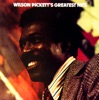

Previews and buy links via the iTunes Search API; other links open a search on that service.
Influence & legacy
"Engine No. 9" arrived at a pivotal moment for both Wilson Pickett and the songwriting team of Kenneth Gamble and Leon Huff, whose Philadelphia International Records empire was on the verge of reshaping Black popular music entirely. The track stands as an early, high-profile demonstration of what the Philly soul sound could do when grafted onto a rawer, more Southern sensibility — Pickett providing the grit while Gamble and Huff supplied the groove architecture.
The song's driving, locomotive rhythm and insistent horn arrangement made it a staple of funk and soul DJs through the 1970s, and it circulated widely in the emerging hip-hop community. The track has been sampled and interpolated by numerous hip-hop and R&B artists drawn to its percussive momentum and that memorable brass punch, making it one of the more frequently mined records in Pickett's catalog for later producers.
Within the broader story of the Gamble-Huff catalog, "Engine No. 9" occupies an interesting transitional position. It predates the full flowering of Philadelphia International's house style, yet it clearly signals the direction the duo was heading — layered, groove-centered production with a strong rhythmic engine at its core. Hearing it alongside later Philadelphia International productions by the O'Jays or Harold Melvin and the Blue Notes reveals how much of what followed was already present in embryo.
Pickett's reading of the song also helped cement his reputation as a versatile performer capable of adapting to contemporary production trends without surrendering his core identity. While it may not be ranked among his very best-known recordings internationally, it remains a respected entry in his late-period work and a document of soul music in productive transition, still appreciated by collectors and dancers who know their 45s.