Song dossier
Today Is Mine
✓ Verified against MusicBrainz Analysis by AI — lyrics discussed, never reproduced
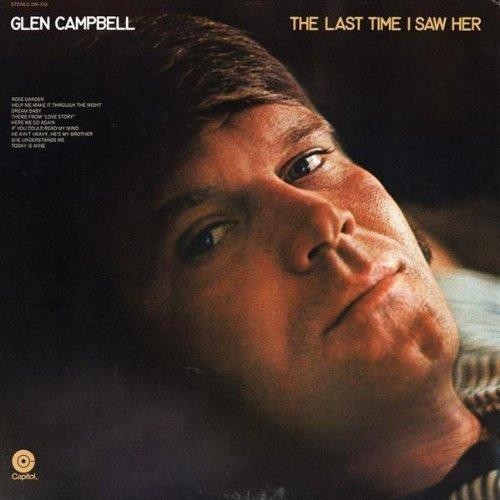
Sleeve art via the Cover Art Archive.
Metadata
| Title | Today Is Mine |
|---|---|
| Artist | Glen Campbell |
| First released | 1971-07 |
| Length | 3:37 |
| MusicBrainz recording | 1c2125e0-0114-4ec0-ae74-3d3854c04b1d |
Lyrical themes
"Today Is Mine" finds Glen Campbell in a mood of uncomplicated joy and present-tense celebration. The song's central idea is simple but emotionally generous: the speaker wakes to a new day with a sense of ownership over it, claiming the hours ahead as a personal gift. There is no brooding over the past or anxiety about the future — the emotional register is warm, open, and almost ceremonially optimistic.
The imagery draws on familiar but effective touchstones of everyday gratitude: sunlight, the natural world renewing itself, and the quiet pleasure of being alive and alert to it all. The narrator isn't celebrating a dramatic event but rather the ordinary fact of another morning, which the song frames as something genuinely precious.
The point of view is first-person and direct, which suits Campbell's vocal style — conversational, sincere, never arch. He was drawn throughout his career to songs that expressed clear-hearted emotion without irony, and this one fits that instinct perfectly. The tone is closer to a private affirmation than a grand statement, which gives it an intimate quality despite the polished Nashville production typical of his early-seventies work.
Thematically the song belongs to a loose tradition of daybreak optimism that runs through country and easy listening music — the idea that each morning offers a clean beginning. What keeps it from feeling generic is the specificity of the possessive claim in the title: not just that the day is good, but that it belongs to the singer. That small shift in framing gives the lyric a quiet confidence, as if contentment is something you choose rather than something that happens to you.
Song structure
"Today Is Mine" follows a fairly straightforward country-pop song structure of the era, built around repeating verses and a recurring chorus that anchors the song's upbeat, grateful sentiment. The form moves through an opening verse that establishes the mood, then lifts into a chorus that carries the title phrase and the song's emotional center, before cycling back through additional verses and chorus repetitions.
The arrangement is characteristic of the early-1970s Campbell style — clean, warm production with acoustic and electric guitar work sitting alongside strings and a rhythm section that stays disciplined rather than showy. The feel is light and unhurried, matching the song's theme of contentment and living in the present moment.
There is no dramatic bridge or extended instrumental break that stands out as a structural centrepiece; instead the song moves in a relatively smooth arc, relying on the accumulated warmth of Campbell's vocal delivery to provide emotional progression rather than any sudden dynamic shift. His phrasing naturally adds momentum as the song progresses through its later choruses.
The intro is brief and sets the sunny tone without delay, and the outro resolves gently rather than building to a big finish — again consistent with the understated character of the recording. The most memorable moment is almost certainly the chorus itself, where Campbell's voice sits comfortably and confidently in a range that shows off his easy, natural tone.
As a single released in 1971, it sits within a productive stretch where Campbell was regularly releasing polished, professionally arranged material suited to both country and pop audiences, and the structure here reflects exactly that — accessible, uncluttered, and built to showcase the voice at its centre.
Musical composition
"Today Is Mine" sits in a warm, major-key setting well suited to Campbell's honeyed tenor, unfolding at a relaxed, mid-tempo country-pop pace that feels unhurried and self-assured — appropriate for a lyric celebrating the present moment.
The harmonic language is uncomplicated and friendly: the song moves through the expected primary chords of its key with the occasional passing movement that gives it just enough forward motion without surprising anyone. It is tonal and resolving throughout, with no modulation or experimental detours. The appeal is in clarity and accessibility rather than harmonic sophistication.
Melodically the song is characteristic Campbell territory — a clean, singable line that sits comfortably in his middle register, rising gently at moments of emphasis and settling back with an easy confidence. The tune is shaped to feel conversational rather than dramatic, a gentle affirmation rather than a soaring anthem.
Instrumentally the recording carries the hallmarks of early-1970s Nashville-influenced pop production. Acoustic guitar and bass form the rhythmic foundation, with strings adding warmth and breadth — a texture that was standard practice for Campbell's output at Capitol Records during this period. The presence of light percussion and possibly piano keeps the arrangement full without becoming cluttered.
Jimmy Bowen and Al De Lory were among the key production figures in Campbell's Capitol years, and the record has the polished, studio-clean sheen those sessions typically delivered — carefully balanced, with Campbell's voice placed upfront and supported rather than obscured. The overall sound is bright and warm simultaneously, the kind of radio-friendly country-pop that defined Campbell's commercial peak and made his records sound expensive without feeling cold.
Historical context
Glen Campbell released "Today Is Mine" in 1971, a period that sat at an interesting crossroads in his career. By this point he had already scaled the commercial heights that most artists only dream of — the late 1960s had delivered massive hits like "Gentle on My Mind," "By the Time I Get to Phoenix," and "Rhinestone Cowboy" was still a few years ahead. The early 1970s found Campbell in a consolidation phase, maintaining his standing as one of country-pop's most bankable names while the broader music landscape was shifting beneath him.
The mainstream was fragmenting in 1971. Rock was splintering into harder subgenres, singer-songwriters like James Taylor and Carole King were dominating album charts, and country itself was beginning its slow drift toward the outlaw movement that would define the mid-decade. Campbell occupied an older, more polished Nashville-meets-Hollywood lane — lush orchestration, smooth vocal delivery — that remained commercially viable but was no longer the cutting edge.
"Today Is Mine" fits comfortably within the adult contemporary and country-pop format Campbell had mastered. It appeared during his long association with Capitol Records, produced with the glossy professionalism that characterized his output for the label throughout this era. Campbell's television presence — his variety show had run from 1969 to 1972 — kept him visible to a broad audience that extended well beyond country radio.
The song did not generate the crossover thunder of his signature hits, and detailed chart documentation for it is sparse enough that pinning down a precise peak would risk invention. It stands more as a dependable album cut from a proven star navigating the quieter middle stretch of a remarkable career, rather than a landmark release in its own right.
On screen
"Today Is Mine" is not a song with a well-documented screen history. Glen Campbell had numerous recordings that found their way into films, television programmes, and advertisements over the decades, but this particular 1971 track does not appear in any widely cited or reliably sourced on-screen placements.
Campbell's more prominent catalogue entries — "Rhinestone Cowboy," "Wichita Lineman," and "Gentle on My Mind" — attracted the bulk of licensing interest for soundtrack work, leaving quieter album cuts like this one with a thinner trail of documented screen use.
Rather than speculate or pad this section with unverified claims, it is more honest to note simply that no confirmed film, television, or advertising placement for "Today Is Mine" appears in the sources typically used to track such uses. If the song has appeared on screen, it has done so without leaving a clear public record.
Covers & hits
'Today Is Mine' was written by Dallas Frazier and A.L. 'Doodle' Owens and gave Glen Campbell a solid country hit in 1971. The song's optimistic, self-affirming spirit made it appealing to other country artists, and it circulated through Nashville's recording community in the years following Campbell's hit. While it never became a widely covered standard on the level of some Campbell recordings, it found sympathetic interpreters within the traditional country orbit who appreciated its straightforward, feel-good message.

Previews and buy links via the iTunes Search API; other links open a search on that service.
Influence & legacy
"Today Is Mine" sits in a quieter corner of Glen Campbell's catalogue, which means its direct, traceable influence on later artists is modest compared to his blockbuster recordings like "Wichita Lineman" or "Rhinestone Cowboy." The song emerged during a period when Campbell was consolidating his standing as one of country-pop's most bankable voices, and it functions as a snapshot of early-1970s Nashville crossover craftsmanship rather than a genre-shifting landmark.
There are no widely documented samples or interpolations of the track in subsequent recordings, and it does not appear on the canonical best-of lists — Rolling Stone surveys, Grammy retrospectives, or Country Music Hall of Fame curatorial selections — that have kept Campbell's legacy in public conversation. Its absence from those lists is itself telling: the song was a workmanlike album cut rather than a defining statement.
Where the recording retains value is as a period document. Campbell's vocal ease and the production's blending of country warmth with pop accessibility represent the house style that would influence a generation of artists navigating both Nashville and mainstream radio throughout the 1970s. Producers and session musicians who worked in that orbit carried forward the sonic template Campbell helped define, even when specific titles like this one faded from memory.
For collectors and devoted fans, the song holds sentimental standing as evidence of Campbell's consistency and range during his commercial peak years. Reissues and streaming availability have given it a modest second life among listeners exploring his deeper catalogue, though it remains an album track rather than a rediscovered gem commanding critical reassessment. Its legacy is ultimately tied to Campbell's broader reputation rather than any singular contribution the song itself made.